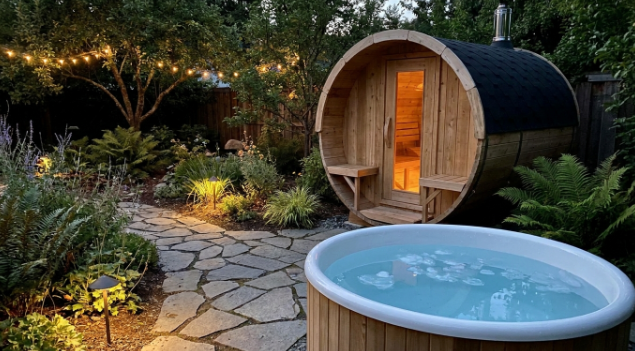
A 6 person sauna works fine through a cold winter, but freezing outdoor temperatures add a few minutes to the usual 30 to 45 minute preheat, increase electricity use somewhat since the heater is fighting a bigger temperature gap, and add a short list of seasonal tasks: keeping the path and door area clear of snow and ice, checking the base each spring for freeze-thaw damage, and inspecting outdoor-rated electrical components before the season starts. None of this rules out year-round use. It just means winter changes the maintenance rhythm a bit compared with a mild climate.
How Much Longer Does Preheat Take in Freezing Weather?
A traditional 6 person cabin normally takes 30 to 45 minutes to bring its stone bed up to full temperature. In freezing outdoor conditions, the walls are losing heat to the cold air outside faster than they would on a mild day, so the heater has to work harder just to reach the same interior temperature, which can stretch that preheat window by several minutes. Well-insulated cabins handle this better than thinner-walled models, which is worth checking on a spec sheet before buying if year-round use in a cold climate is the plan from the start.
See also: Why Online Classes Feel More Stressful Than Traditional Learning for Many Students
Does Winter Use Cost More in Electricity?
Yes, and the reason is straightforward physics rather than anything mechanical going wrong. A heater maintaining, say, 180 degrees inside the cabin against a 20 degree outdoor temperature is working against a much bigger gap than the same heater maintaining that temperature against a 60 degree day, so it cycles on more often to hold steady. For a household using the sauna a few times a week, the seasonal increase in the electricity bill is usually modest rather than dramatic, but it is a real cost difference worth factoring into a winter usage budget rather than assuming the bill stays flat year round.
What Seasonal Tasks Does Snow and Ice Add to the Maintenance List?
The most immediate winter task is simply keeping the path to the door clear of snow and ice, both for safety walking to and from the cabin and to keep meltwater from pooling right at the threshold where it can work its way into door seals over repeated freeze-thaw cycles. Roof or top-panel snow load is worth a glance after heavier storms too, particularly for outdoor units without a lot of roof pitch. None of these tasks are difficult, but they are easy to forget until the first cold snap arrives and the sauna has not been checked since the previous spring.
Does an Insulated Changing Area Make Sense in a Cold Climate?
Some owners in genuinely cold regions add a small insulated changing or entry area just outside the cabin door, which cuts down on the temperature shock of stepping straight from a 180 degree cabin into freezing outdoor air. This is not a requirement, and plenty of households simply keep towels and robes staged close to the door instead, but for a 6 person cabin hosting multiple people through a single winter evening, a slightly more sheltered entry point can make the whole routine more comfortable without much added cost or construction.
How Should the Base Be Checked After a Hard Winter?
Freeze-thaw cycles, where moisture in the ground or in a paver base freezes, expands, and thaws repeatedly over a winter, can shift or crack a foundation that was perfectly level in the fall. Come spring, it is worth checking that the cabin still sits level and that no gaps have opened up between the base and the floor framing, since even a small shift can stress door seals and wall joints over a full season of use. Catching this early, before the next winter compounds the problem, is far easier than dealing with a cabin that has slowly gone out of level over several years.
Does Cold Weather Affect the Electrical System?
Outdoor-rated electrical components are built to handle seasonal temperature swings, but it is still worth a quick inspection at the start of each winter, checking that any exterior disconnect switch, conduit, and outdoor junction boxes show no signs of moisture intrusion or cracked housings from the previous season. This is a five-minute visual check for most owners, not a full electrician visit every year, though anything that looks damaged or corroded is worth having a professional look at before the heater sees regular winter use.
Where Should Buyers Look When Comparing Cold-Climate Options?
Insulation quality, wall thickness, and heater sizing all vary between models, and those differences matter more in a genuinely cold climate than they do in a mild one, where a thinner-walled cabin can still perform reasonably well. Before buying specifically for winter use, it is worth comparing insulation specs across a few 6 person listings rather than assuming all cabins in this size class handle cold the same way. sweatdecks.com lists several 6 person models with their wall construction details included, which makes that kind of side-by-side comparison easier than digging through separate spec sheets on different sites.
Does Winter Change Anything About the Health Research Behind Sauna Use?
The Finnish cohort research most associated with sauna bathing, including studies summarized in a 2018 Mayo Clinic Proceedings review and a 2018 review in the American Journal of Physiology, comes from a country with long, cold winters, so the underlying data already reflects populations using saunas consistently through cold months rather than only in summer. A 2018 systematic review in Evidence-Based Complementary and Alternative Medicine reached broadly similar conclusions across a wider range of studies. None of this research suggests winter use carries different health associations than warmer-weather use. If anything, the population behind much of the foundational research used saunas through winters colder than most of the United States sees, which is a reasonable point of reassurance for anyone wondering whether cold-climate use changes the picture.
Frequently Asked Questions
Does cold weather make a 6 person sauna take longer to heat up? Yes. Freezing outdoor temperatures can add several minutes to the usual 30 to 45 minute warmup as the cabin loses more heat through the walls.
Can a 6 person sauna be used year-round in a snowy climate? Yes, but keep the path to the door clear of snow and ice, and check the base each spring for freeze-thaw damage.
Does the cold affect the wood or the electrical system over a winter? Properly sealed wood handles cold well, though freeze-thaw cycles stress sealant faster, and outdoor electrical components should be checked each season.
Is it more expensive to run a 6 person sauna in winter? Yes, since the heater works harder against a bigger temperature gap, though the increase for typical use is usually modest.
References
- Clinical Effects of Regular Dry Sauna Bathing: A Systematic Review, Evidence-Based Complementary and Alternative Medicine, 2018
- Effects of heat and cold on health, with special reference to Finnish sauna bathing, American Journal of Physiology – Regulatory, Integrative and Comparative Physiology, 2018
- Benefits and risks of sauna bathing, The American Journal of Medicine, 2001
By Julia Ferris
