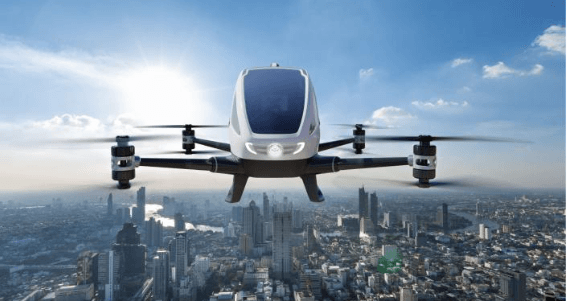
The frontier of aerospace innovation blends advanced materials, additive manufacturing, and intelligent systems to boost performance and safety. Lightweight alloys, lattice metamaterials, and consolidated parts shrink weight and cost while enhancing resilience. Propulsion streams pursue efficiency and sustainability through optimized powertrains and alternative fuels. Autonomous avionic stacks and data-driven decision tools enable smarter trajectories and reliability. Startups and diverse teams push rapid iteration, yet every milestone raises new questions about integration, certification, and scalability.
What Are the Frontiers of Aerospace Innovation
The frontiers of aerospace innovation are defined by synergistic advances in propulsion efficiency, materials resilience, and autonomous control, all aimed at delivering safer, more reliable, and economically viable flight at higher performance envelopes.
Composite alloys enable weight reduction; lattice metamaterials contribute vibration control; avionics autonomy accelerates decision cycles; bioinspired propulsion informs efficiency; microgravity research broadens testing; urban air mobility scales accessibility; thermal management sustains systems; AI assisted design guides optimization.
Lightweight Materials and Manufacturing Breakthroughs
Rigorous testing and lifecycle data show improved fuel efficiency, payload capacity, and resilience under extreme conditions.
Advanced composites and aluminum-lithium alloys enable deeper design envelopes.
Additive manufacturing accelerates prototyping, part consolidation, and complex geometries, driving cost reductions and rapid iteration with high reliability.
Propulsion, Autonomy, and Sustainable Flight
This lens highlights propulsion autonomy efforts advancing lightweight manufacturing, optimized powertrains, and robust autonomy stacks, underscoring sustainable flight trajectories and aerospace innovations shaped by data-driven decisions and freedom to explore new airspace.
Startups and Teams Shaping the Next Era of Air and Space
Startups and early-stage teams are redefining the aerospace landscape by translating bold ideas into scalable technologies, from novel propulsion concepts to autonomous systems and advanced manufacturing. They attract diverse talent, secure capital, and publish measurable milestones. Bioinspired aerodynamics informs efficiency gains, while quantum sensing pushes precision in navigation and surveillance. The ecosystem accelerates collaboration, reducing development cycles and risk for ambitious air and space ventures.
See also: Innovations in Aerospace Technology
Frequently Asked Questions
How Will Quantum Computing Impact Aerospace Optimization and Design Cycles?
Quantum optimization could accelerate design cycles by solving complex routing and material problems faster, enabling more iterative testing. The approach remains data-driven and forward-looking, appealing to freedom-seeking engineers who value rigorous benchmarking and measurable performance gains.
What Roles Will AI Ethics Play in Autonomous Flight Systems?
AI ethics will shape autonomous flight systems through AI governance, safety assurance, autonomous perception, and trustworthy autonomy, guiding transparent decision-making, rigorous validation, and continuous auditing to balance innovation with public safety and operator freedom.
Can Bio-Inspired Processes Enable Significant Energy Savings in Aviation?
Bio inspired energy could drive meaningful gains, with potential aviation efficiency improvements from morphing skins and optimized propulsion. The analysis remains data-driven, forward-looking, and clear-eyed, suggesting researchers pursue scalable, liberty-friendly designs that balance performance, safety, and regulatory acceptance.
How Will Space Debris Management Influence Commercial Launch Strategies?
Space debris will shape launch strategy, as orbital cleanup costs and regulatory constraints compress market viability timelines; operators will adapt with debris-mitigation credits and risk-based scheduling, fostering disciplined orbital operations and assessed, data-driven investments in preventive measures.
What Regulatory Hurdles Could Slow Novel Propulsion Concepts?
Regulatory hurdles could slow novel propulsion concepts, as agencies demand rigorous safety, environmental, and interoperability data. The analysis notes incremental timelines, standardized testing, and international harmonization as key determinants shaping investment, deployment, and future freedom to explore propulsion innovations.
Conclusion
This synthesis highlights how materials innovation, advanced manufacturing, propulsion, and autonomous systems are jointly expanding performance, safety, and efficiency in air and space domains. A data-driven trajectory points to lighter, tougher composites and aluminum-lithium alloys enabling broader design spaces, while optimized powertrains and autonomous avionics reduce emissions and risk. Example: a hypothetical regional hybrid-electric aircraft employing carbon fiber–reinforced structures and lattice metamaterials could cut fuel burn by 25–40%, accelerating scalable, sustainable urban and cross-border mobility.
